
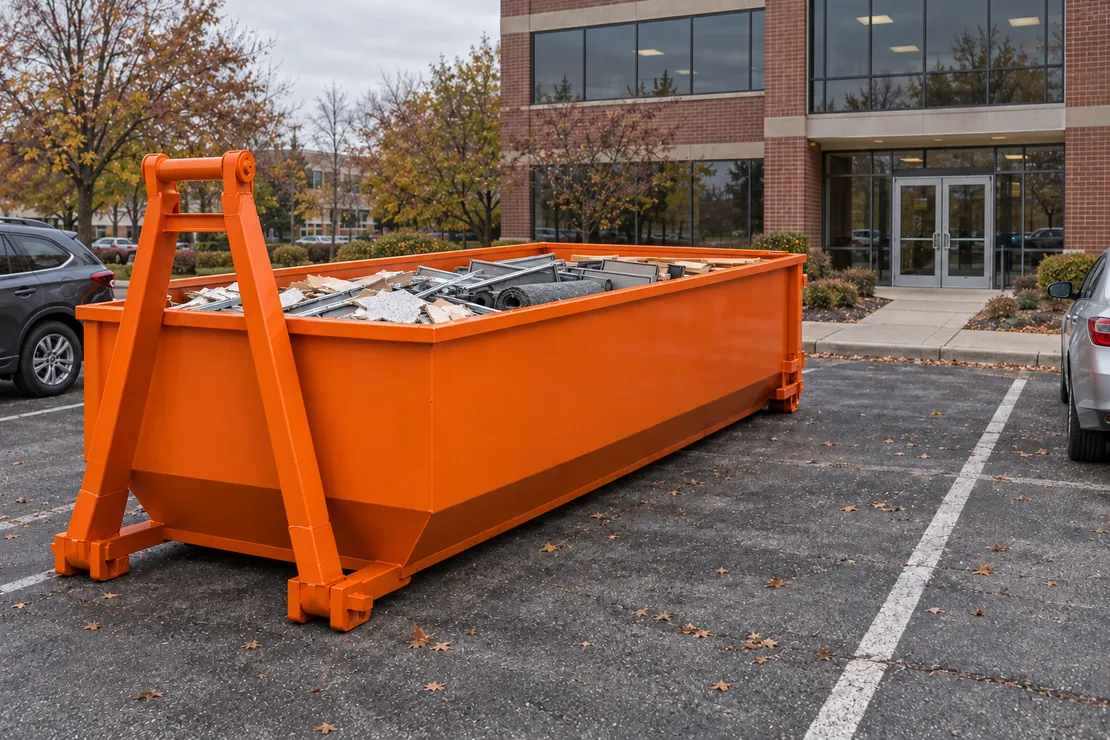
Short answer: a six week renovation of a commercial office building filled 16 dumpster loads, 31.15 tons of debris. Most of it left through one 20 yard dumpster that we hauled, emptied and set back in the same parking spot 11 times. For about two and a half weeks in the middle, a second 20 yard joined it for the heaviest tear-out.
We pulled these numbers from our own load records for the job and left out the business name and address. If you are lining up job site dumpster rental in Kansas City for an office building that stays open during the work, this is a real benchmark to plan from.
How Many Dumpster Loads Does an Office Renovation Take?
The size of the gut decides it, but here is what this multi suite remodel produced from delivery to final pickup:
| Measure | Result |
|---|---|
| Length of the job | About six weeks |
| Loads in 20 yard dumpsters | 16 |
| Total weight of those loads | 31.15 tons |
| Average load | 1.95 tons (about 3,900 lb) |
| Lightest and heaviest load | 1.20 and 3.48 tons |
| Loads within the 20 yard's included weight | 12 of 16 |
| Final cleanout | One 15 yard dump trailer, 5.45 tons |
Office debris is mostly bulk with little weight: ceiling tile, drywall, carpet, metal grid and old furniture. That means the dumpster runs out of room long before it runs out of weight. Each 20 yard load includes 2 tons, and 12 of the 16 loads stayed within it.
What Size Dumpster for an Office Renovation?
This job ran on 20 yards, the size most commercial work takes. A 20 holds a big volume of bulky debris while taking up roughly two parking stalls, which matters when the lot is still serving tenants and visitors. Length, width and height are on the 20 yard dumpster rental page. A larger box holds more per trip but needs more of the lot, so on an occupied building the space you can spare usually picks the size for you.
One Dumpster or Two?
Most office buildings have exactly one spot where a roll off truck can reach a dumpster without blocking parking, a fire lane or the front door. On this job that one spot carried 12 of the 17 loads:
- Week 1: the first Dump & Returns came within days of delivery. Tear-out produces debris faster than any later phase.
- Weeks 2 and 3: the heaviest stretch. A second 20 yard sat beside the first for about two and a half weeks, then left.
- Weeks 4 to 6: the main spot handled everything on its own, emptied every few days to once a week as each area was finished.
- Last days: a 15 yard dump trailer came in for three days to clear the final cleanout.
The takeaway for your own plan: keep one dumpster in one spot on a regular haul schedule, and bring in a second only for the demolition weeks instead of paying for two the whole time.
How a Dump & Return Works
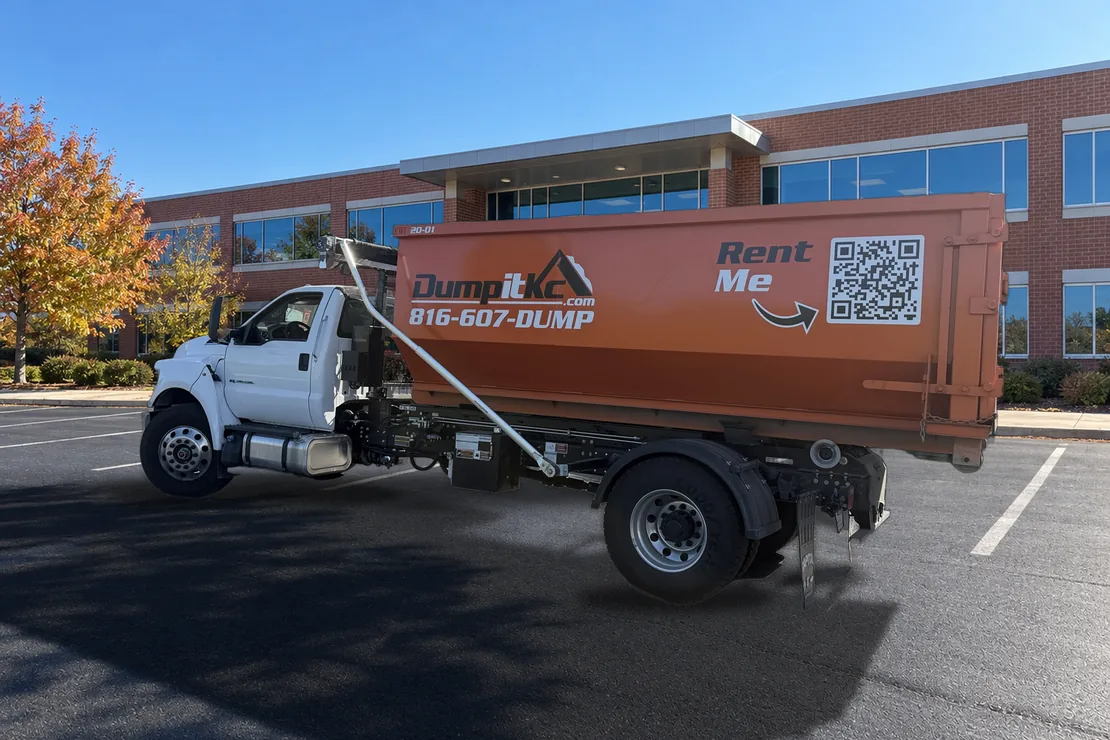
You schedule it ahead. On the day, the driver hooks the full dumpster, takes it to the transfer station to be weighed and tipped, and brings the same dumpster straight back to the same spot, empty. There is no gap where the crew has nowhere to put debris.
A 20 yard Dump & Return is $350, and each one includes a fresh 2 tons. Weight does not carry over between loads; the details are in our guide to how dumpster weight billing works. Contractor accounts get their discount on the Dump & Return base fee as well; see contractor dumpster discounts.
Only room for one dumpster? Schedule a Dump & Return.
Already have one of our dumpsters on site? Request the next haul from your account and we will empty it and set it back in the same spot.
Timing Hauls Around the Renovation
- Book the next haul early. Put the next Dump & Return on the schedule while there is still room left in the box, not once debris is stacked on the asphalt.
- Match the haul rate to the phase. Demolition weeks may need a haul every day or two. Framing, drywall and finish work can go several days between hauls, the way this job did in its final weeks.
- Clear the approach on haul days. The truck needs the same path in that it used for delivery, with no parked cars or pallets in front of the dumpster.
- Keep the load level with the walls. A flat load below the top edge leaves on time. Anything sticking up has to be fixed first.
Placement at an Office Building
- Choose the spot before delivery. Walk the truck's path, look up for wires and canopies, and keep parking, ramps and the entrance open.
- Use the same spot every time. Because the dumpster comes back where it was, the crew's carry route from the building never changes.
- Street placement needs a permit. If the dumpster has to sit on a street or other public property, the permit is your responsibility. See our Missouri dumpster permit guide.
- Check what can go in. Some items carry an added fee or are not allowed. The restricted dumpster items list has them.
Renting for the business itself, such as a cleanout, an office move or a store reset, rather than a renovation? Start with commercial dumpster rental in Kansas City.
About the authors

Keep reading
Waste Removal
Bagster vs. Dumpster Rental in Kansas City: Which One Fits Your Job?
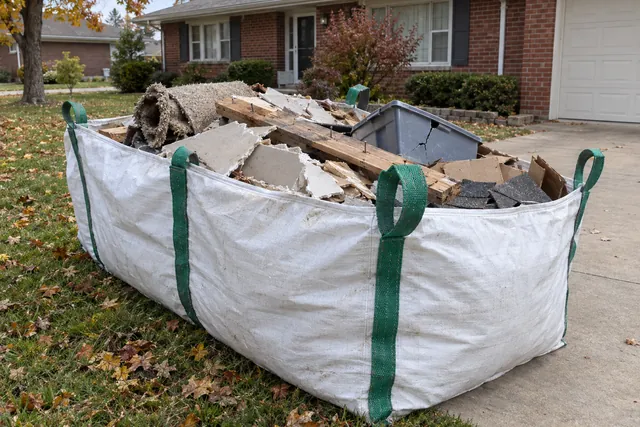
A Bagster holds about one pickup load and only one cubic yard of concrete or dirt. Here is where a dumpster bag runs out and why most jobs need a real dumpster.
Waste Removal
Are Dumpsters Charged by Weight? Flat Rate vs Pay by Weight in Kansas City
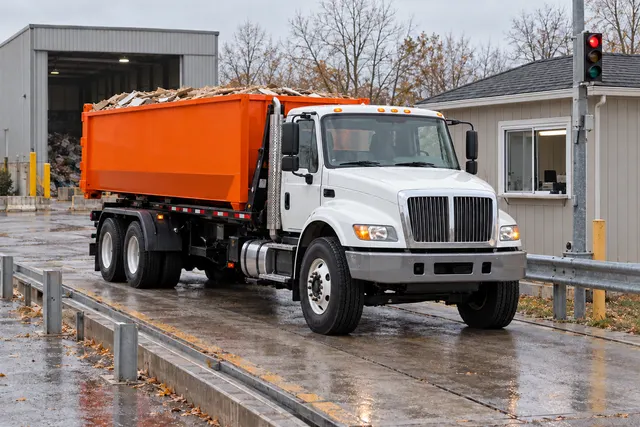
Most dumpster rentals are flat rate with a weight allowance. Here is how each pricing model works, what disposal covers and what our real loads weighed.
Waste Removal
Bulky Item Pickup in Kansas City: Free Large Trash Pickup by City (2026)
Kansas City, MO books free bulky pickups by appointment, but most suburbs work differently: a monthly bulky day, a yearly hauler pickup, a paid tag or nothing at all. Here is the rule for all 52 metro cities.


